





The Social and Ethics Committee is a statutory Committee in terms of section 72(4) of the Companies Act, read in tandem with Regulation 43 of the Companies Regulations, 2011. The Committee fulfilled its duties in terms of its approved terms of reference. The Committee monitors the Group’s activities in relation to organisational ethics, responsible corporate citizenship, the ESG Strategy, sustainable development, and stakeholder relationships.
The Committee’s Membership is detailed on Key governance actions and meeting attendance. Members of the Group Executive Committee and other senior employees are standing invitees. From time to time, various subject matter experts are invited to engage the Committee on topical matters. Some of the year’s key focus areas are set out on the following pages, with cross-references to where more detailed information is included.
No material issues were identified during the period. In accordance with the Committee’s terms of reference, the Committee effectively discharged its statutory duties and responsibilities over the year under review. As Chairperson of this Committee, I will be available at the Group’s AGM to respond to any enquiries regarding the statutory obligations of the Committee.
The past year was not without its challenges. COVID-19 continued to cause disruption and necessitate new ways of working and engaging with our employees. The turbulent macro-environment, locally and beyond our borders, emphasised the importance of being socially and environmentally responsible and accountable.
The Committee, with management’s assistance, played a crucial role in overseeing the Group’s response to and management of these and other important matters to ensure they were addressed. This is critical to safeguarding Telkom’s long-term success and ensuring we remain responsive to our stakeholders’ needs.
COVID-19 continued to highlight the changing employeremployee relationship and the actions required to assist employees in recovering from the impact of the pandemic. Therefore, the Committee had an important role in assessing management’s response to the pandemic. This included interrogating the Group’s trade-offs to protect employees’ health and safety and responding to new ways of working.
The Committee considered management’s decision to implement the Group’s mandatory vaccination policy and work-from-home policy, both of which were announced this year. These policies were the outcome of constructive and open engagement with employees, and while difficult conversations were necessary, the Committee is pleased with how these conversations were managed. Ultimately, the Committee believes these policies demonstrate Telkom’s commitment to take action to mitigate the impact of COVID-19 in the workplace and among our broader communities.
Since the start of the pandemic in 2020, 64 employees passed away due to COVID-19. These employees contributed to the Group’s culture and success and are sorely missed. Our sympathies are with their loved ones.
The Committee continued to oversee the Group’s approach to stakeholder engagement to ensure that issues and concerns were addressed and responded to accordingly. The Committee noted an improvement in the Group’s relationship with customers, including a reduction in customer complaints and persistent, strong brand equity affirmed through third-party market research.
The focus on environmental, social and governance risk is increasing globally. Stakeholders expect businesses to do more in response to some of the most defining issues of our time, including climate change, biodiversity loss, good governance and inequality.
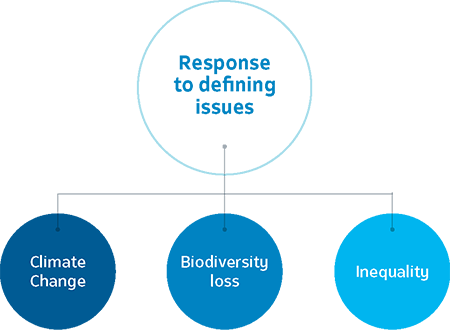

While Telkom has a proud legacy of being a good corporate citizen, the Group recognised that more could be done to formalise its approach to ESG. This includes providing stakeholders with evidence of progress, tracked against strategy, metrics and targets. Telkom, therefore, adopted a formal ESG Strategy during the year, which was reviewed and approved by the Board. This strategy demonstrates that the Group is serious about its environmental, social and governance commitments. It further builds on Telkom’s strong foundation to deliver on its ESG ambitions and create sustainable economic, environmental and social value that aligns with the needs of today’s society.
The Committee welcomed Telkom’s commitment to greater transparency on its ESG performance, aligned with globally recognised reporting standards and frameworks. This includes expanding its reporting on climate-related risks and opportunities in line with the requirements of the TCFD and science-based emissions targets.
We believe the Group is on the right track, as can be seen by Telkom retaining its certification as a constituent company in the FTSE4Good Index Series. In alignment with accountability, ESG will be linked to rewards through the Remuneration Committee.
As a Committee, we were particularly comforted and encouraged to see the Group maintain its strong focus on ethics, without exception. This is critical to maintaining business resilience, protecting Telkom’s reputation and retaining stakeholders’ trust in the business in uncertain times.
During the year, the Committee recommended to the Board for approval of the Group Ethics and Governance Strategy and the revised Group Ethics Handbook. These resources are critical to ensure Telkom proactively embeds an ethical culture across the Group and is properly equipped to identify and mitigate emerging ethics-related risks.
The Committee reviewed the results of the Group ethics and fraud survey undertaken during the year to measure the adequacy of Telkom’s Ethics and Fraud Programme. The results were encouraging, and the Committee was pleased to see that most respondents strongly agreed that the Group’s Programme is effective. This survey was supplemented by an International Fraud Awareness Week and a supplier survey to further embed a culture of ethics and compliance among employees and suppliers. These initiatives further increased awareness and comfort with mechanisms available to report unethical and fraudulent behaviour.
The Committee strengthened its governance of ethics by establishing a process whereby employees and the public can report alleged misconduct by Telkom or its suppliers through the hotline. Finally, the Committee monitored and was satisfied with the outcomes of the Vulumlomo: Speak Up Campaign, which was launched in May 2021. This campaign encouraged stakeholders to report suspected acts of fraud, unethical conduct and other issues that could harm Telkom, and strengthened the Group’s ability to reduce corruption and mitigate against potentially fraudulent activities.
| Programme | Outcome | |
| Telkom Ethics and Fraud Programme | The Committee reviewed the survey to assess the adequacy of Telkom’s Ethics and Fraud Programme, and the results were encouraging. | |

|
||
| Telkom Vulumlomo: Speak Up Campaign | The Committee monitored and was satisfied with the outcomes of the campaign, which was launched in May 2021. | |

|
Actions taken by the Group during the year were important to ensure that Telkom is appropriately positioned to continue fulfilling its role as an ethical and responsible corporate citizen in the year ahead.
 Strengthening our focus on equity,
diversity and inclusion
Strengthening our focus on equity,
diversity and inclusion To deepen awareness about the importance of equity, diversity and inclusion, the Committee introduced these elements into its Annual Ethics Leadership Pledge for FY2023. In particular, the Board diversity policy now includes a special focus on gender. This supports our commitment to SDG 8, one of the Group’s four priority SDGs, emphasising decent work and economic growth.
While the global economy is recovering from the worst effects of COVID-19, conflict and supply chain disruptions are slowing progress. Locally, rising unemployment, continued power supply disruptions and socio-political instability exacerbate already constrained economic growth and development. The civil unrest in July 2021 is a stark reminder of the consequences of South Africa’s social inequality and the urgent need for meaningful socio-economic transformation.
The Committee noted the developments from the Zondo Commission. This encouraged us as a company to look into any lessons learnt and improve any governance and internal control gaps we may have.
| Telkom Foundation positive impact |
|
|
|
| Telkom Foundation teacher development |
|
|
|
During the year, the Committee oversaw the actions taken by the Group and the Telkom Foundation to deliver positive and transformational impact at scale. This included an ongoing focus on providing academic support through an expanded network of zero-rated educational sites, academic support through supplementary tuition, psychosocial support to contribute to learner psychosocial wellness, and ongoing investment in the Telkom Foundation’s Teacher Development, School Leadership Development and Digital Skills Programmes.
The Group further partnered with Youth Employment Service (YES) to provide South African youth with access to workplace experiences and the opportunity to learn future-fit skills. These investments play an important role in contributing to social and economic development that injects critical skills into the economy. The Group’s partnership with YES aims to address the challenge of youth unemployment in South Africa, which is particularly important considering South Africa’s record-high unemployment in 2022.
Through its supplier development, incubation and funding initiatives, the Group has supported over 2 500 enterprises since 2015. FutureMakers, which aims to develop ICT SMMEs within Telkom’s supply chain, supported SMMEs with an investment of R88 million (FY2021: R31 million). FutureMakers created 772 direct jobs and 26 463 indirect jobs, respectively, through the invested portfolio. The increase in indirect jobs is due to including all income opportunities created on platforms we invested in.
| R37 million in grant funding |  |
| R36 million in incubation, training and prototyping |  |
| R15 million in interest-free loans |  |
The Committee is satisfied with Telkom’s contribution to many of South Africa’s biggest socio-economic challenges.
We are committed to ensuring that Telkom remains a responsible corporate citizen, led by our purpose of seamlessly connecting our customers to a better life.
Thank you to management and my fellow Directors for championing this important journey. In particular, we recognise the contribution of Mr Navin Kapila, who is retiring after serving as a long-standing Member of the Committee. Working with him has been a great pleasure, and we wish him a purposeful and enjoyable retirement. It was also my pleasure to serve on the Telkom Board for over nine years and recently as Chairperson of this Committee and will miss the culture and the people.
The Group has experienced unprecedented challenges in recent times. Despite these challenges, there has been a persistent effort and investment to move Telkom forward. We look forward to advancing even further against our ESG goals and priorities in the year ahead.
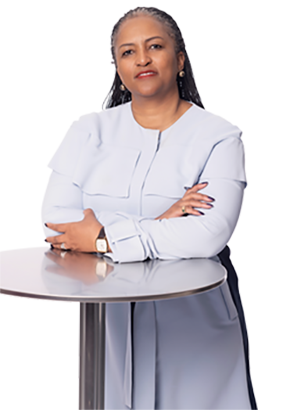
Kholeka Mzondeki
Chairperson
Social and Ethics Committee