
Climate change affects our operations in various ways. Our infrastructure is vulnerable to extreme weather events, and the availability of resources such as water is essential for our network operations.
We are working to reduce our emissions, increase energy efficiency, and integrate renewable energy into our operations. We are exploring innovative solutions to adapt and build resilience to climate change in our infrastructure and supply chains.
Telkom acknowledges the increasing importance of climate governance to ensure resilience against climate-related risks and capitalise on emerging opportunities. The Board provides strategic oversight, integrating climate-related considerations into corporate decision-making. Climate has been a standing agenda item at Board level as part of ESG since 2022.
The Board holds ultimate responsibility for overseeing risk and compliance across the Group, including climate-related risks. Climate oversight is delegated to the Social and Ethics, Audit, and Risk Committees. They monitor progress on climate-related initiatives, provide recommendations, and ensure alignment with Telkom’s broader ESG and corporate strategy.
In FY2025, we strengthened climate governance by formally integrating climate risk considerations into the ERM framework. This ensures climate-related risks are assessed together with strategic and financial risks.
We completed Telkom’s first climate risk scenario analysis, assessing how extreme weather events, temperature changes and regulatory shifts may impact our operations and financial performance. These insights were presented to the Board.
At operational level, the Exco governs and supports climate change initiatives, ensuring that climate-related priorities are embedded in core business functions. The ESG Impact Council oversees climate-related performance. Quarterly meetings review progress against carbon reduction targets, energy efficiency initiatives and adaptation measures.
Telkom appointed a net zero initiative custodian. This role is responsible for tracking, co-ordinating and ensuring successful implementation of decarbonisation initiatives. It will ensure we meet key milestones in our net zero strategy, and drive engagement across business units to integrate climate objectives into operational planning.
Telkom engages with stakeholders, including investors, regulators and ESG rating agencies, to ensure transparency in climate-related disclosures. This ensures we assess climate-related risks and opportunities in the context of long-term value creation, regulatory compliance and investor expectations.
To further strengthen climate governance, Telkom has:
Telkom integrates climate-related risks and opportunities into its strategic decision-making, recognising their impact on business resilience and long-term value creation. They include physical risks, such as extreme weather events affecting infrastructure, and transition risks, including regulatory changes and carbon pricing mechanisms. Our strategy focuses on mitigating risks, enhancing operational resilience, and leveraging opportunities in the transition to a low-carbon economy.
In FY2025, we completed our first climate risk scenario analysis. This assessed the impact of climate-related hazards under two scenarios (RCP 4.5 and RCP 8.5) across the 2030 and 2050 timeframes. The findings highlighted the following:
We have incorporated these insights into risk mitigation and capital investment planning, ensuring infrastructure resilience against climate hazards.
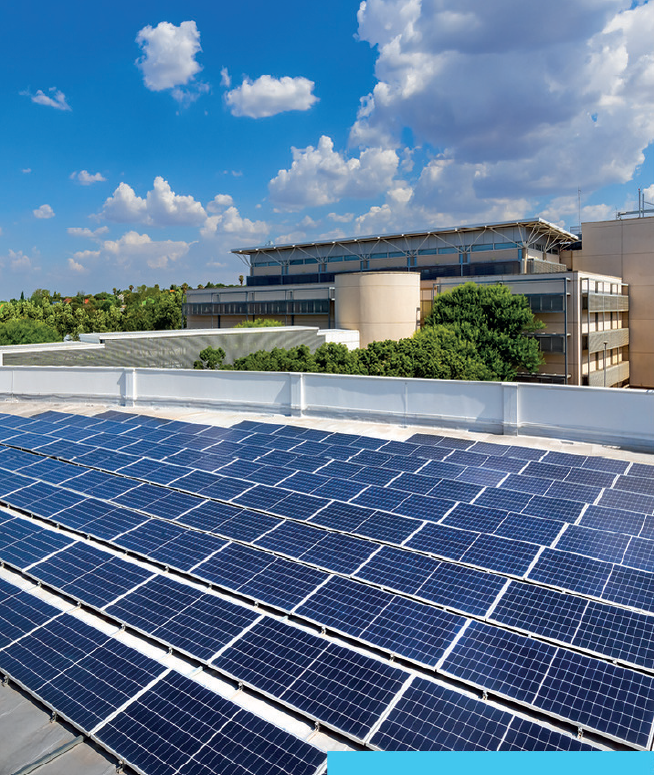
Telkom also faces transition risks, particularly from the expansion of South Africa’s carbon tax. If Scope 2 emissions become taxable, it could impact operational costs. To reduce our carbon tax exposure, we are accelerating our solar power installations and enhancing our energy efficiency initiatives.
A major milestone in FY2025 was the development of Telkom’s net zero pathway, outlining clear decarbonisation initiatives aligned with our target of net zero emissions by 2040. As part of this, we submitted our net zero targets for validation under the SBTi framework.
Opportunities arising from our climate strategy include:
Through data-driven scenario analysis, decarbonisation initiatives, and proactive risk management, Telkom is strengthening its climate resilience and positioning itself for sustainable growth in a low-carbon economy.
Telkom integrates climate risk into its risk identification, management and assurance processes. A Board-approved ERM methodology and philosophy ensures effective risk management across the Group. Refer to the Managing risks and compliance section for further insight into our ERM processes, accountabilities, and emerging and strategic risks.
Regulatory, reputational and physical risks are identified and assessed annually, and considered three to six years into the future. Our integrated assurance framework identifies, assesses, monitors and reports on the Group’s complex risks and opportunities.
Through our ERM processes and material matter determination process (Preparing our integrated report), the Board oversees risk and ensures compliance across the Group, with support from the Group Exco and both the Audit and Risk Committees.
Telkom manages climate-related risks and opportunities within the business functions where they are identified. However, all major climate-related risks have response plans with trigger thresholds (related to severity of impact) where higher levels of management should get involved.
The Group Emergency Management Team reports to the Group Exco and manages risks that significantly impact business-as-usual and the execution of Telkom’s strategy (i.e. the highest trigger threshold). The team ensures continuity of service delivery through the implementation of defined emergency management procedures.
We continued to strengthen Telkom’s ability to respond to disasters, including extreme weather events. This included:

Telkom reports its carbon footprint according to the GHG Protocol, in line with global best practice and the TCFD recommendations. We disclose Scope 1, 2 and 3 emissions alongside key climate-related performance indicators such as energy consumption, water usage and waste management.
In FY2025, Telkom enhanced its emissions tracking and reporting capabilities. This included the following:
| Target and comments | ||||
| Scope 1 emissions |
Target: Reduce Scope 1 and 2 emissions by 4.2% linear annual reduction rate. Aligned with SBTi ambitions. |
|||
| Scope 2 emissions |
||||
| Scope 3 emissions |
Target: No target set for FY2025 Telkom intends to finalise the Group sustainable procurement strategy, which will address our Scope 3 carbon footprint. |
|||
| Water consumption |
Target: No target set for FY2025 We are committed to responsible water consumption. This is evidenced by a 0.4% reduction in water consumption due to site monitoring. |
|||
| E-waste recycled |
Target: No target set for FY2025 E-waste recycling increased by 28% due to ongoing decommissioning of legacy equipment. |
|||
| Goal statement | Goal sub-statement | Progress in FY2025 | Priorities in FY2026 |
| Carbon neutral by 2035 | 100% reduction in Scope 1 and 2 emissions |
The decrease in Scope 1 emissions was due to ongoing diesel optimisation. Telkom Park 1 MW solar PV operational since July 2024. It has since generated 749 664 kWh of green energy. SBTi validated and approved our 2040 net zero target. |
Install more lithium-ion batteries to further optimise diesel usage. Continue to decommission legacy equipment to reduce energy consumption in our exchanges. |
| Migration from fossil fuels to comprise only 50% of energy use by 2030. |
Solar rooftop installations underway. Energy efficiency measures implemented. Redundant legacy equipment continues to be decommissioned. |
Increase focus on solar PV and explore feasibility of alternative large-scale generation, such as quad generation. Ongoing energy efficiency initiatives. |
|
| 100% of energy use from renewable sources by 2035. | |||
| Migration from R22 refrigerant gases by 25% in 2025 and 100% by 2035, from a 2016 baseline. |
At year-end, there was 30.7 tonnes of R22 gas in the heating, ventilation and air conditioning system. We met our 2025 regulatory reduction target of 31.5 tonnes. |
||
| Net zero by 2040 | Determine Scope 3 emissions from use of sold products. | Scope 3 targets defined and submitted to the SBTi for validation and approval. | Refine the calculation of Scope 3 emissions and finalise the sustainable procurement strategy to address Scope 3 emissions. |
| Encourage recyclable and biodegradable materials. | Developing a Group waste strategy that incorporates circular economy principles and practices. | Finalise the Group waste strategy. | |
| 75% reduction in waste to landfill by 2030. | |||
| 50% reduction in potable water consumption by 2030. | Water-saving initiatives identified (e.g. water harvesting and borehole drilling) and business cases in place. | Implement water-saving initiatives as per the approved business cases. | |
| Carbon offsets for unavoidable emissions. | Long-term initiative to be considered once Group assets are optimised and on-site opportunities are exhausted. | Factor carbon offsets into long-term initiatives in the sustainability roadmap. |