
We monitor local and global trends to assess their potential impact on our markets and customers. Then, if needed, we adapt our strategy to leverage the associated opportunities or mitigate the risks.
| The four key external themes |
Estimated timeframe in which it will significantly impact Telkom |
Related material theme |
|||
| Short-term | Medium-term | Long-term | |||
1 |
Navigating local and global economic headwinds |
|
|||
2 |
Considering the ICT sector and technology evolution |
|
|||
3 |
Staying relevant amid intensified competition |
|
|||
4 |
Managing regulatory change; |
|
|||
Context
Two opposing forces dictate South Africa’s short-term economic growth outlook. First, the worsening electricity crisis stands in contrast to an improved global risk appetite amid an easing of global inflation, a lessening of recession risks, and the reopening of the Chinese economy after an extended period of COVID-19 isolation. However, the ongoing Russia-Ukraine war, global climate change and natural disasters still weigh heavily on global economic prospects.
Although better economic prospects for some South African sectors give cause for some optimism, they are unlikely to compensate for the constraining impact of loadshedding, ongoing logistical constraints, and the lagged impact of the 425 basis point increase in interest rates since November 2021.
The South African Reserve Bank forecasts South African economic growth of 0.1% for 2023, expanding by 0.7% in 2024 and 1.0% in 2025.
Implications for our strategy
We consider the risk of lower revenues and higher operational costs due to ongoing loadshedding and higher input costs due to a depreciating exchange rate. We focus on sustainable cost management and targeted capital investments to mitigate the downside risk of lower economic growth and climate change considerations.
Further reading
Unpacking our PIVOT Strategy
Context
The South African context presents an opportunity for large-scale socio-economic transformation through digital innovation. This should be an inclusive journey, leading to benefits for all and limiting the negative impacts of the fast pace of change, which is expected to continue for the foreseeable future. For example, during the COVID-19 pandemic, the highest data usage was not in more upscale neighbourhoods but rather in lower-income areas where many people were studying and working from home.
As 5G technology enters the mainstream and telecommunications leaders unlock its full potential, several industries are taking quantum leaps in productivity, safety and sustainability. In the mining industry, for example, the high-speed connectivity that 5G provides is helping to make the Internet of Things (IoT) a reality. When material amounts of data and information can be shared reliably, with almost no latency, mines and mining machinery can be automated and operated remotely. This boosts productivity and minimises safety and sustainability risks.
Implications for our strategy
Telkom officially launched its 5G network in October 2022. We have the largest fibre network in the country, and with the recent allocation of the sub 1 GHz frequency spectrum, we are well positioned to become an enabler of a connected society. We aim for all South Africans to be part of the digital ecosystem.
"My vision for Telkom is to see how we can drive solutions that bridge South Africa’s digital divide. It is not just about the big corporates or rich suburbs, it is also about connecting the smallest villages so that everyone can be part of our emerging digital society.” Serame Taukobong, GCEO
Telkom has been piloting 5G networks in areas such as Soweto, Mamelodi and Umlazi to see how it can help people with limited access to connectivity. These projects have given schools, clinics, hospitals and police stations access to Telkom’s 5G network, and have shown the widespread demand for broadband.
At the Nungu coal mine in Mpumalanga, Telkom partnered with suppliers to upgrade the safety and efficiency of the mine using 5G connectivity. This included 5G-enabled cameras to monitor inventory levels and improve safety at the mine.
Further reading
Unpacking our PIVOT Strategy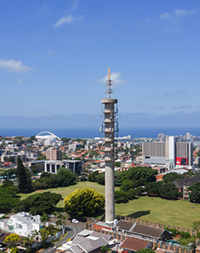
Context
Competition within the South African ICT sector continues to intensify. As a result, South African consumers have enjoyed reduced overall telecommunications costs over the last year. However, inflationary pressures are increasing network providers’ fees, which has slowed price reductions.
As local consumers increasingly adopt a digital-first lifestyle, the increase in data demand continues unabated. And as network coverage and expansion occur, investments from fixed and mobile network providers remain strong. At the same time, operators remain committed to customer network experiences by improving network availability and uptime, especially during loadshedding. With access to additional spectrum, incumbent mobile operators compete more aggressively within the mobile data market.
Implications for our strategy

Telkom remains resolute in its data-led strategy and maintains a value-based pricing strategy across most of our product portfolios. We remain committed to providing customers with affordable data and a quality network experience. To ensure that no customer is left behind, we offer attractive customer value propositions that respond to the connectivity needs of all market segments.
During FY2023, Telkom launched FlexOn and Infinite, a pre- and post-paid smartphone tariff portfolio, respectively. The monthly Tarifica score report recognises these plans as market-leading in all categories of light, moderate and heavy usage profiles. We also launched several fixed-mobile convergence offers (Telkom Fusion), providing customers with the best of fixed and mobile at a reduced price.
We believe Telkom is well poised to maintain market leadership by offering customers the best value for money for all their fixed and mobile connectivity needs. We continue to invest in our operations, technology, and people to ensure we remain a reliable connectivity partner during a challenging economic cycle while providing exceptional service and value.
Further reading
Enterprise risk management and compliance
Unpacking our
PIVOT Strategy
Context

Telkom obtained sub 1 GHz spectrum in the Independent Communications Authority of South Africa (ICASA) auction. We deployed 800 MHz in some regions, although parts of South Africa remain unavailable due to existing broadcasting systems. The target date for the final switch-off of analogue television was initially proposed to be 31 March 2023 – the new date is still to be communicated. The switch-off will free up sub 1 GHz spectrum nationally for mobile services.
ICASA initially committed to auction 800 MHz and other available spectra (except wireless open-access network) before April 2023, but this is now planned for early 2024. ICASA will consider spectrum holdings post-auction, imbalances in sub 1 GHz, and the impact of the auction outcome on competition. ICASA also undertook to conduct an inquiry into the existence of a secondary spectrum market to assess the need for regulatory intervention.
Call termination regulations are meant to promote competition in the local ICT sector. ICASA acknowledged that the mobile voice market is highly concentrated. However, its findings document of March 2022 changed the basis upon which entities qualify for asymmetric rates without considering the competition implications. Telkom has challenged this to ensure a new glidepath that will support pro-competitive outcomes.
Implications for our strategy
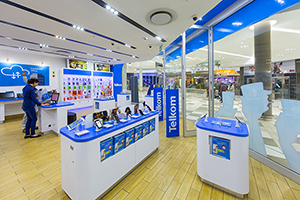
Telkom upholds the principles of enhancing service quality, customer choice and effective competition. Therefore, it will strive to ensure that any regulations imposed are procompetitive and do not constrain its ability to compete fairly in a concentrated market.
Telkom trusts that the final call termination regulations will be pro-competitive, considering the effect of the removal of mobile termination asymmetry on smaller operators. Spectrum licensing also needs to be pro-competitive.
Further reading
Government and regulators